OUR ROOTS
Our Roots — Peru, our commitment and the origin of BOTANINCA
Peru is not a postcard. Markets, families, plants — the true story behind BOTANINCA, far from marketing promises.
What the markets taught me
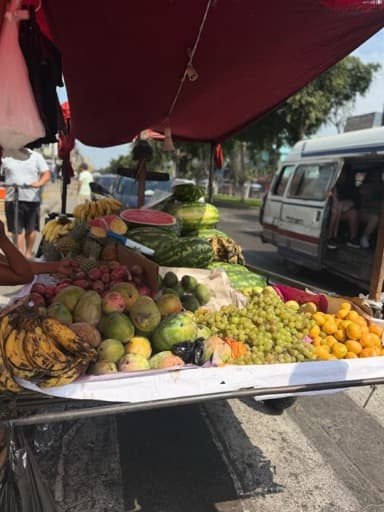
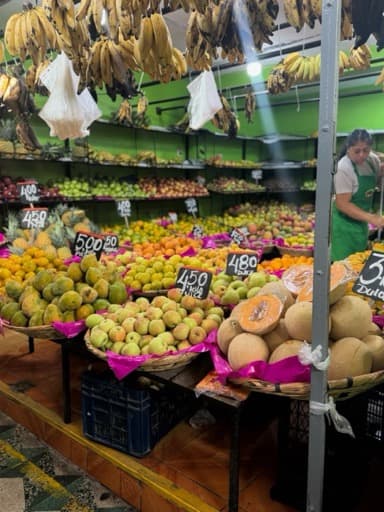
In the markets of Lima and Cusco there are stalls unlike anything we know in Europe. Dried roots, barks, powders in colours you couldn't name. Women sitting behind them who know every plant by heart. Not from studies. From transmission. From centuries of observation and practice.
That is where I first came across tocosh. A traditional fermented food made from potatoes, following a process dating back to the Inca empire. A natural antibiotic, a powerful probiotic, used for generations to protect the gut. Magical is not too strong a word.
Tocosh is still classified as a Novel Food in France. There is currently no legal route to import it. I'm working to change that. Because what those women know in the markets of Lima deserves to cross the ocean.
In the meantime, it is that same conviction that gave rise to BOTANINCA.
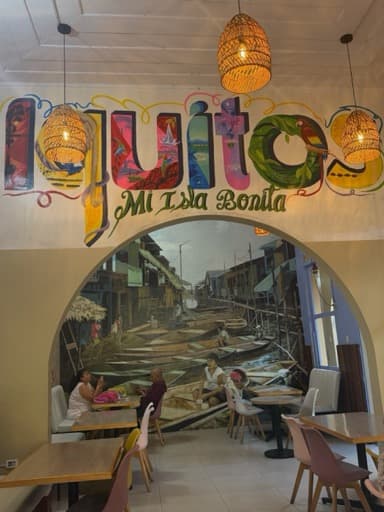
December 2025 · The Chocolatada
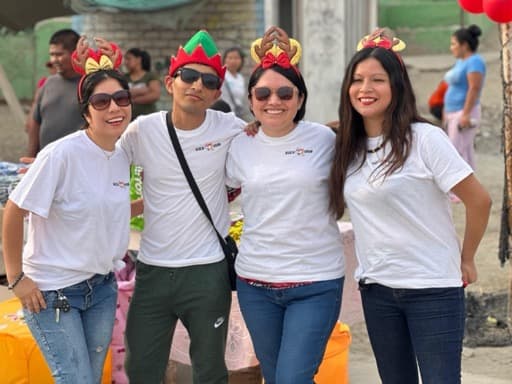
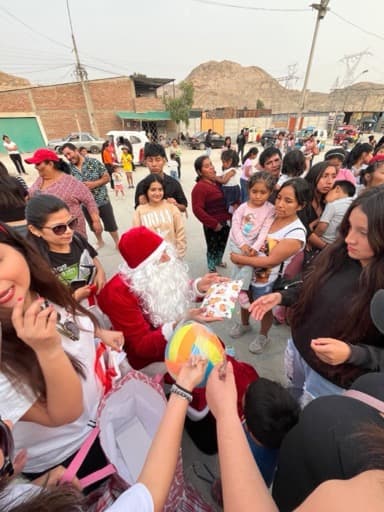
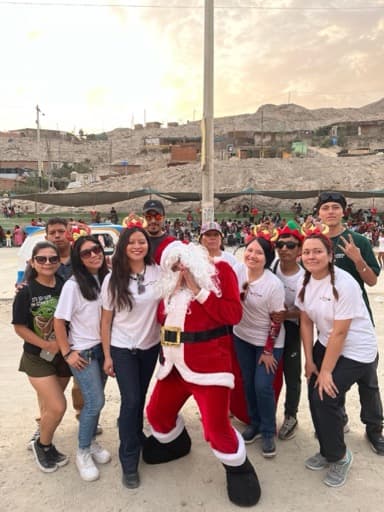
In Peru there is a tradition called the chocolatada. Every year before Christmas, families, associations and communities organise gatherings to offer hot chocolate and gifts to children from underprivileged neighbourhoods. For many of them, it is the only gift they will receive.
In December 2025, BOTANINCA gave its first euros to the Buen Vivir association to organise a chocolatada. 100 gifts. 100 children. And a French Father Christmas who speaks fluent Spanish but was still lost for words that day.
That moment is why the €1 per order exists. Not for an abstract promise. For specific faces, names and smiles you don't forget.
The bond these people have with nature
What strikes you most in Peru is that nature is not a backdrop. It is a relationship.
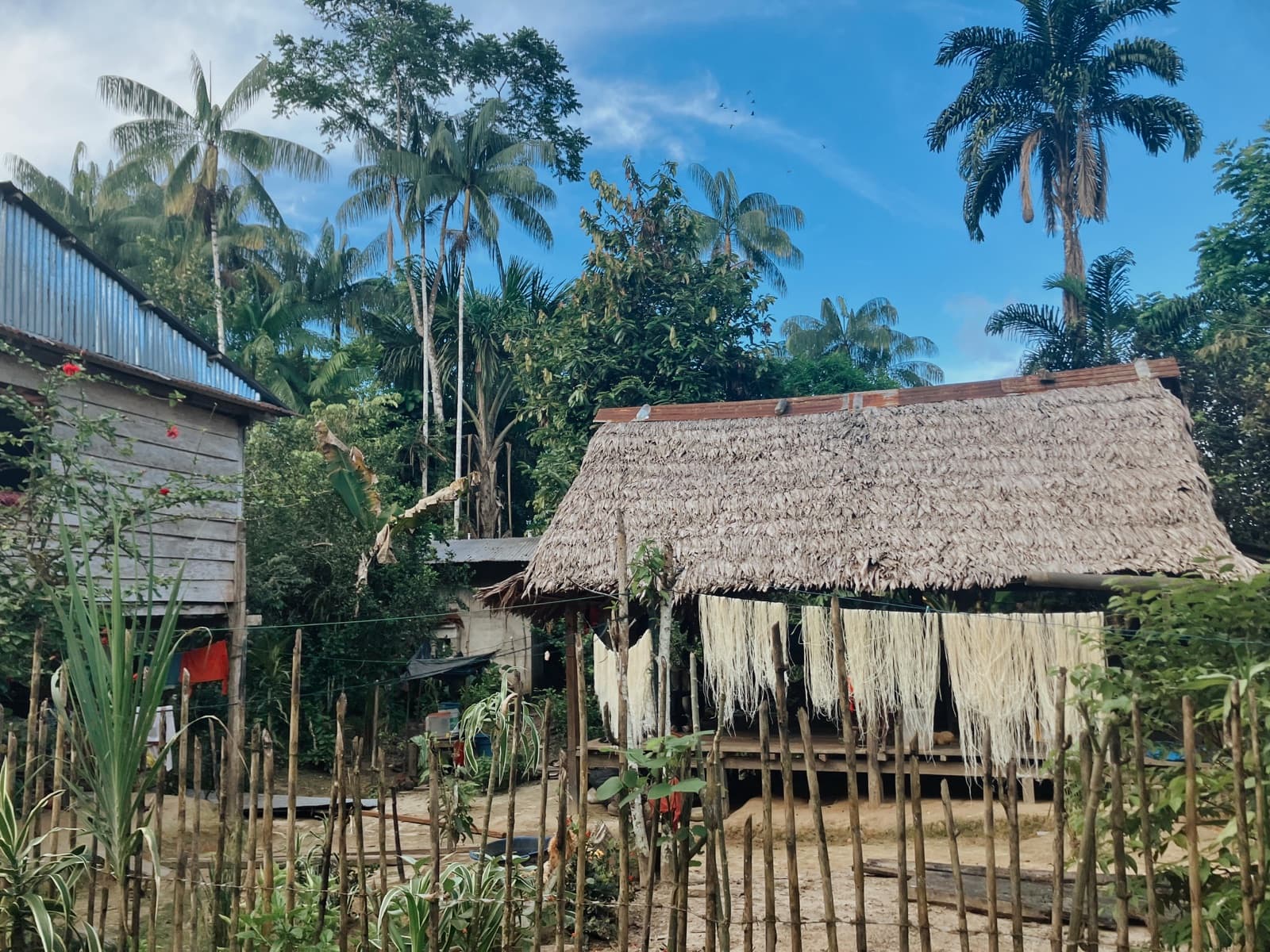
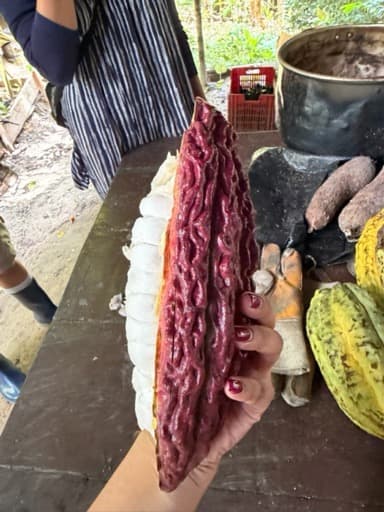
Andean communities don't consume plants. They know them. They know when to harvest them, how to prepare them, what they treat and what they don't. This knowledge is oral, passed from mother to daughter, from grower to grower. It is written nowhere. It lives in people.
Maca grows between 3,800 and 4,500 metres, in poor volcanic soil, under a cold that kills almost everything else. The farmers who grow it know exactly why it is strong. Because it had to be.
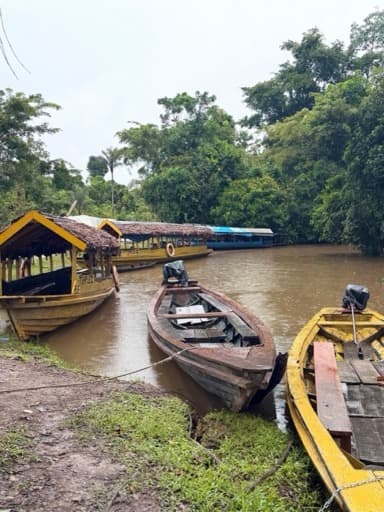
Camu camu grows in the zones flooded by the Amazon's rising waters. The women who pick it navigate by canoe between submerged trees during the rainy season. They know every shrub by heart.
Uña de Gato climbs century-old trees in a forest so dense that light never reaches the ground. The harvesters know which ones to cut and which to leave so the vine grows back.
That knowledge — thousands of years old, precise, irreplaceable — is what BOTANINCA has committed to respecting and paying for fairly.
What we give back, and why
€1 per order. Not a percentage. Not a share of profits. A fixed €1, whatever the size of the order.
Those euros go to the Buen Vivir association, which works directly in Peru for local communities. The December 2025 chocolatada is the first action funded. It won't be the last.
The next impact report will be published here in 2026.
100 children · December 2025 · Buen Vivir association
Lima · where it all began
My wife is Peruvian. She is the one who opened the doors of this country to me — not as a tourist, but as someone entering a family. Lima is where I understood that Peru is not a poor country with beautiful ruins. It is a country rich in knowledge we have forgotten.
BOTANINCA was born there. In a kitchen in Lima. Around a preparation that no one around me in France knew, but which everyone there took for granted.
That knowledge deserved to cross the ocean.
Why Peru, and nowhere else
Maca doesn't grow everywhere. It requires an altitude above 4,000 metres, specific volcanic soils and extreme temperature swings. The Junín region, in the central Peruvian Andes, has met those conditions for millennia. It is there, and nowhere else, that the root develops the macamide concentration documented in clinical studies.
Camu camu is an Amazonian fruit. It grows on the flooded banks of the rivers of the lower Peruvian Amazon — in conditions intensive agriculture cannot reproduce. Its vitamin C concentration, 60 times higher than an orange, is the product of that unique environment.
Cat's claw has climbed the trees of the Amazon rainforest for centuries. Shipibo healers have used it for generations for joint pain and immune support. Its name comes from its curved thorns. Its bark contains the oxindole alkaloids documented in clinical trials.
We didn't choose Peru because it's exotic. We chose it because that is where these plants are what they are.
What we don't do
We don't formulate 15-ingredient blends in which none reaches a clinical dose. We don't claim effects that studies don't document. We don't sell maca grown industrially at low altitude.
MACA³ and CAMU² are certified organic by Ecocert — not because it's a marketing argument, but because the quality of the growing soil directly influences the root's phytochemical profile.
Every blog article cites its PubMed sources. Every product page states the contraindications. The 90-day guarantee needs no justification, because a product that has to be defended with arguments isn't a product worth selling.
For every BOTANINCA order, €1 goes to the Buen Vivir association to support the rural Peruvian communities who grow our plants.
Next action planned: 2026 · Peru.
DISCOVER OUR PRODUCTSOne purchase. One commitment.
100 children · 100 gifts
December 2025 chocolatada, rural villages of Peru
Every jar sold gives €1 to farming communities and to children in rural villages. Every year we go back there, because a brand that takes without giving back is nothing but a business.
Where we draw from,we give back.